
Digital sky demonstrator PROJECT
U-space European COMmon dEpLoyment (U-ELCOME )
U-space European COMmon dEpLoyment (U-ELCOME )

U-ELCOME project addressed the fully scalable market uptake of U1 and U2 U-space services through a set of tests and demonstrations in various operational environments and European locations. To do so, U-ELCOME develops, tests and demonstrates SESAR solutions in various across 15 locations distributed in Spain, Italy and France.
Combining digital and physical infrastructure capabilities, U-ELCOME aims to set up, deploy and demonstrate up to Technology Readiness Level 8 the following SESAR solutions:
- U-space U1 — foundation services: aimed to identify drones and operators and to inform operators about known restricted areas. With the deployment of U1, more drone operations are enabled, especially in areas where the density of manned traffic is low. The U-space foundation services include e-registration, e-identification and geoawareness.
- U-space U2 — initial services: supported the safe management of beyond the visual line of sight (BVLOS) operations and a first level of interface and connection with ATM/ATC and manned aviation. With the deployment of U2, the range of operations at low levels will increase, including some operations in controlled airspace. Drone flights will no longer be considered on a case-by-case basis, and some BVLOS operations will become routine. The U-space initial services will include at minimum the following: tactical geo-fencing, emergency management, strategic deconfliction, weather information services, tracking, flight planning management, monitoring, traffic information, drone aeronautical information management and procedural interface with ATC.
U-ELCOME project built on the outcomes of the previous European projects bridging from research, through
industrialisation to implementation; at the same time the U-ELCOME project works in compliance with Regulation 2021/664 on a regulatory framework for the U-space and related amended 2017-373 and 923/2012 regulations. UELCOME relies on real U-space systems, which are in operation or to be deployed by ENAIRE, ENAV, D-Flight and Thales during the execution of the project.
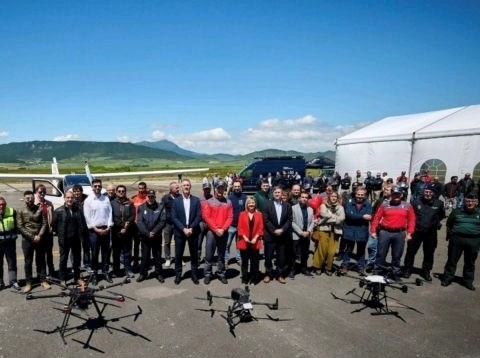
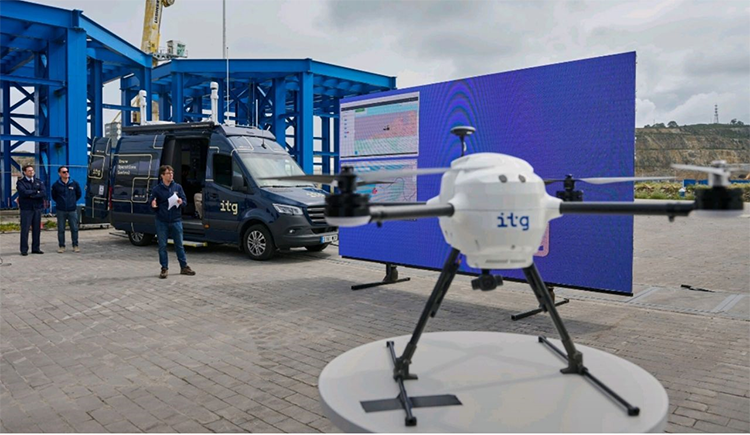
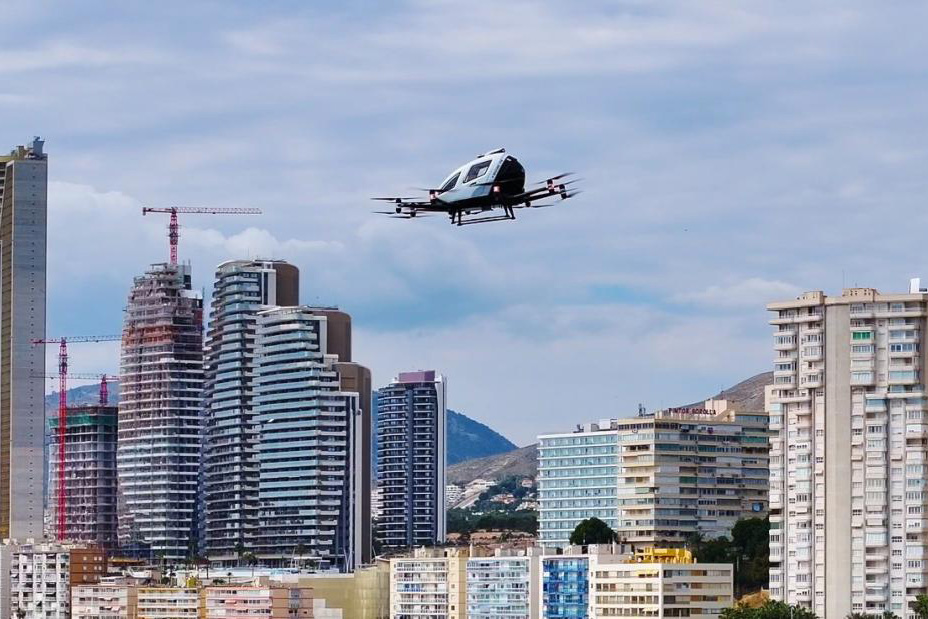
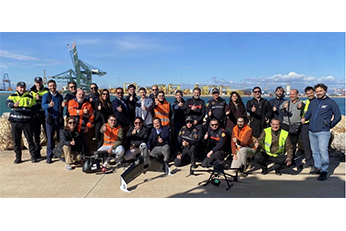
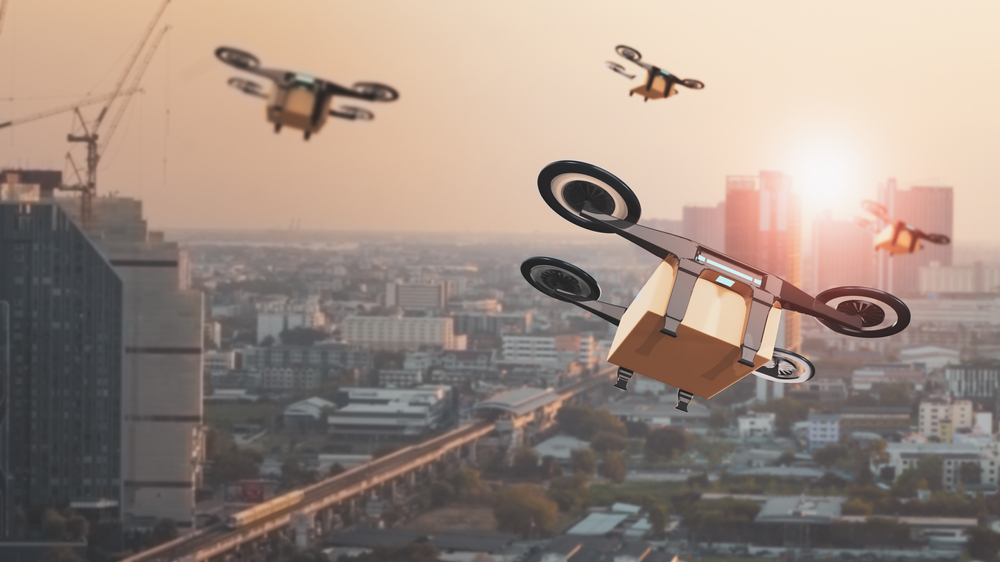
The U-ELCOME demonstrations integrated the U-space ecosystems with existing ATM systems, and to each other. The U-space capabilities and U1 and U2 services of the pre-operational U-space ecosystems will be demonstrated in several live use cases in various operational environment, which represent the most typical missions for both business and civil authority use such as Medicals and Goods deliveries, Inspection flights, aerial works in urban and sub-urban environment, controlled and uncontrolled airspace.
To do so, U-ELCOME used a scalable U-space architecture enabling information exchange and coordination among Uspace Service Providers (USSPs) and the Common Information Service Provider (CISP), as well as between USSPs, CISP and ATM using interoperable standards. This will allow for automated drone traffic management and situational awareness among all U-space stakeholders.
The project, working in close cooperation with EASA and other international and national authorities and organisations, also contributed to the consolidation of standardisation and regulatory requirements of the proposed U-space services to further accelerate the deployment of relevant U1 and U2 services and U-space operations.



Project ID:
U-ELCOME
Grant ID:
101079171
Status:
Completed
Project duration:
01-11-2022 > 31-10-2025
EU contr.:
€6 985 843
Total cost:
€15 589 200
Activity:
Digital sky demonstrator
Flagship:
U-space and urban air mobility
SESAR programme:
Digital European Sky
Benefits:
Cost efficiency, Enhanced safety, Optimised capacity, Reduced fuel consumption and emissions
Related solutions
Participants:
Eurocontrol, ENAV, ENAIRE, Deutsches Zentrum für Luft- und Raumfahrt (DLR), Telespazio, D-Flight, EuroUSC, Nextant, TopView, Techno Sky, IDS Airnav, Dronus, Nimbus, UrbanV, Leonardo, Centro Italiano Ricerche Aerospaziali (CIRA), Pipistrel Vertical Solutions, Honeywell, Ingenieria Y Economia Del Transporte (INECO), Globalvia, Fundación Andaluza para el Desarrollo Aeroespacial (FADA), Fundación SSG, AERTEC Solutions, Universidad de Sevilla, Pildo Consulting, Aeroports de Catalunya, Universitat Politecnica De Catalunya (UPC), Universitat Politecnica De Valencia (UPV), ASLOGIC, Gobierno de Navarra, Universidad Pública de Navarra, Mobility and Mechatronics Technology Center (NAITEC), FuVex, Saerco, Dronica Valley, Indra, Parque Tecnológico de Fuerteventura, EHang, Thales, Innov'ATM, Airbus, Direction Des Services De La Navigation Aerienne (DSNA), ANRA Technologies, PANSA (Polska Agencja Żeglugi Powietrznej), UMILES Technologies, Aerocamaras, Instituto Tecnológico de Galicia
U-space European COMmon dEpLoyment (U-ELCOME )
U-space