
In this interview, Florian Selig, MIAR project coordinator and systems engineer at the German Aerospace Center (DLR), explains how the SESAR-supported project is preparing to take next-generation digital communications and navigation into the skies. Its upcoming flight campaign will put LDACS to the test in real flight conditions, bringing the technology one step closer to operational use.
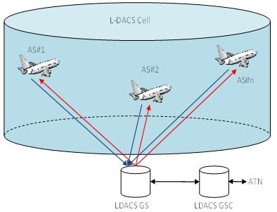
L-band digital aeronautical communication systems (LDACS) is a modern and advanced air/ground secured communication technology that also has navigation and surveillance capabilities. LDACS is now reaching sufficient technical and standardisation maturity and is considered a strong candidate to enhance the current and future mobile data link applications as part of the future communications infrastructure (FCI).
“Designed to be the backbone for next-generation communication and navigation, LDACS will transform aviation communications from legacy analogue/low-speed systems into a modern, high-capacity digital framework,” says Florian Selig, a systems engineer at the German Aerospace Center (DLR).
Thanks to the work being done by the SESAR JU-supported MIAR project, that transformation starts now.
After years of simulation, modelling and cross-disciplinary development, the project is set to launch its flight campaign this month.
Performance under pressure
More than a technical checklist, the November flight campaign will put LDACS through its most demanding test yet – not a lab bench, not a software loop, but a real Dornier Do 228.
During the test, the aircraft will fly instrumented approaches while five experimental ground stations communicate and validate every data point on the ground. “The system will have to perform under the same constraints it will face in operational service: limited bandwidth, moving platforms, atmospheric interference and the simple fact that there is no ‘pause button’ mid-approach,” explains Selig, who is coordinating the project.
The benefits of teamwork
If the campaign delivers the results the team expects, it will mark the transition of LDACS from a research prototype to a technology with demonstrated, flight-proven maturity – a threshold that no amount of ground-based testing can cross.
For the partners involved, it is also the moment when everything that was discussed in countless coordination meetings, every compromise between disciplines, and every re-planning decision made finally has to hold up against physics and weather.
“Aeronautical navigation and communication have historically operated in separate spheres – different standards, different stakeholders, different engineering cultures,” notes Selig. “Bringing both onto a single, integrated system was the project's core ambition, and it demanded that teams who had never worked together sit at the same table, sometimes at the expense of their own disciplinary comfort zones.”
From prototype to product
Once the campaign is finalised and the flight data is in, the path from prototype to product will continue. “Industry partners will take the validated LDACS components and integrate them into the navigation and communication suites of the aircraft that will fly in the coming decade,” remarks Selig.
LDACS will also contribute to more resilient aircraft navigation by providing an additional source of positioning information, helping to mitigate vulnerabilities associated with GNSS spoofing and jamming. Furthermore, as air-to-ground data exchange shifts from narrowband, time-shared links to a digital, high-bandwidth channel, communication delays will be reduced, ultimately freeing up spectrum for other services.
The integration of LDACS will also help mitigate Europe’s capacity crunch, as airports that are already operating near or at their slot limitations will gain a new tool to sequence traffic more precisely without having to build new ground infrastructure.
With LDACS recognised in the European ATM Master Plan and in the proposal for Common Project 2 (CP2) as a key technology for future air-ground communications, the aim to get the technology ready for implementation. “Considering all the benefits LDACS offers, the question is no longer ‘will it work in the sky’ but ‘how quickly can we put it on every plane’?” concludes Selig.
More about MIAR