IFAV3 is a 3-year SESAR project currently approaching the end of its validation phase and already gathering encouraging feedback from the ongoing activities. The project addresses a well-known operational challenge: qualifying air traffic controllers (ATCOs) for new sectors is demanding, resource-intensive, and time-consuming, placing limitations on rostering flexibility and overall operational efficiency. During the first two weeks of November, the last validation exercise of the IFAV3 project took place in Maastricht.
To respond to this challenge, IFAV3 explores a range of flexible endorsement strategies, procedural enhancements, and technical enablers to support a more adaptable deployment of ATCOs across sectors. At the core of this work are the processes smart controller experience assessment and required competency estimation, designed to support more flexible ATCO deployment to upper area control sectors.
The Smart controller experience assessment performs a continuous analysis of ATM related data that are already recorded on a daily basis (e.g. radar recordings). This allows to quantify the experience an ATCO has gained during recent training and/or daily work, which in turn is an indication of their current competency level.
The Required competency estimation considers the analysis of future shifts (e.g. flight plans, weather forecasts, airspace use plan) against a set of criteria to quantify the expected complexity and the level of demand of the ATC tasks within sectors under responsibility of an ACC.
Both solutions together can be used to support a rostering process that always ensures that the ATCO is experienced enough for the ATC tasks that can be expected during their shift in a specific sector. As such, they support a deployment of ATCOs to sectors with a shorter, but always sufficient training. As key results, these solutions help to achieve more flexible allocation of resources based on the demand, significantly improving cost-efficiency in air navigation services by lowering training costs, while maintaining airspace capacity, safety and human performance.
Validation activities in the Maastricht Upper Area Control Centre
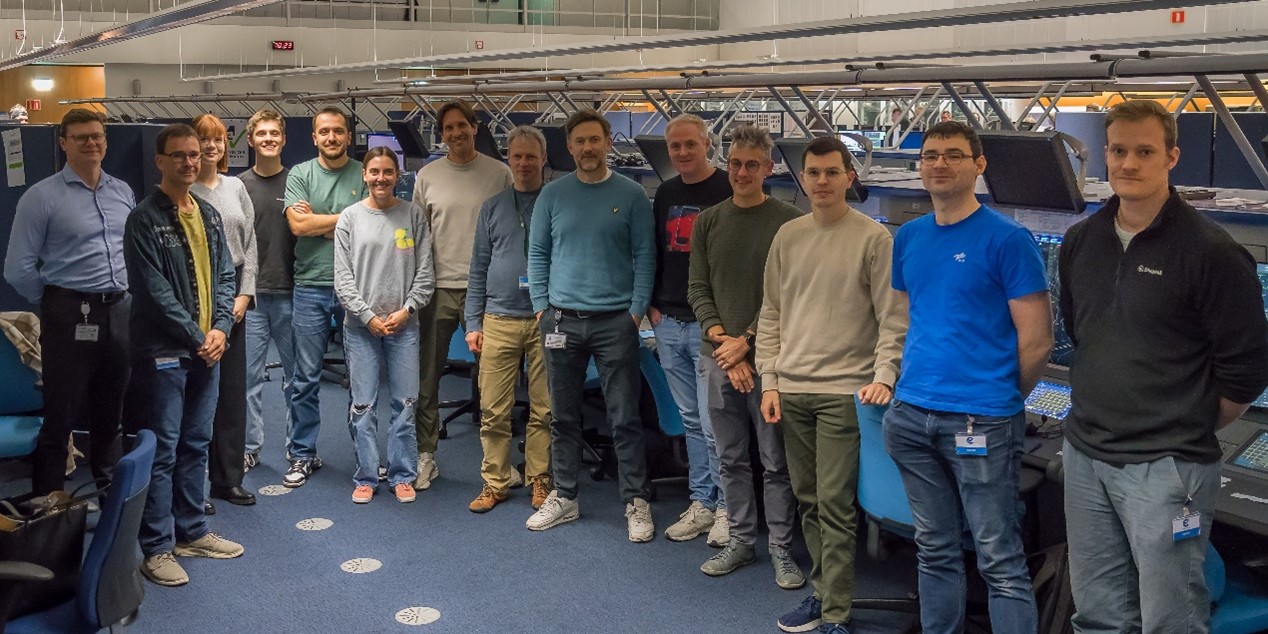
The last validation exercise conducted in IFAV3 was led by DLR and took place from 04 – 13 November at Maastricht Upper Area Control Centre’s (MUAC’s) Training Simulator.
The huge advantages of MUAC as validation exercise location for this trial activity are realistic controller working positions the ATCOs are already familiar with real MUAC sectors available, and realistic traffic scenarios are accessed.
The19 participating ATCOs, as a first step, ran several simulations initially on their ‘home’ sector where they are endorsed for, and, as a second step on ‘unknown’ sectors for which they do not hold an endorsement, and finally, as assessors, on their ‘home’ sector again.
A simulated assessment according to the current operational process was done during the validation, and will already provide first insights if the assessed ATCOs are already competent enough for the ‘unknown’ sectors, and under which conditions. This will be compared with an automatic experience monitoring algorithm, combined with a required competency prediction algorithm developed by DLR with strong support from MUAC, which is intended to enhance the ATCO deployment process in the future by making it more flexible.
Looking ahead
As the project reaches the end of its research phase, the insights gained during this final validation campaign, and the ones already completed, will inform the next steps. Detailed results, analyses and lessons learned will be shared through publications, conferences and social media, contributing to the broader discussion on how to reshape ATCO deployment in a smarter, evidence-based and operationally more efficient way.