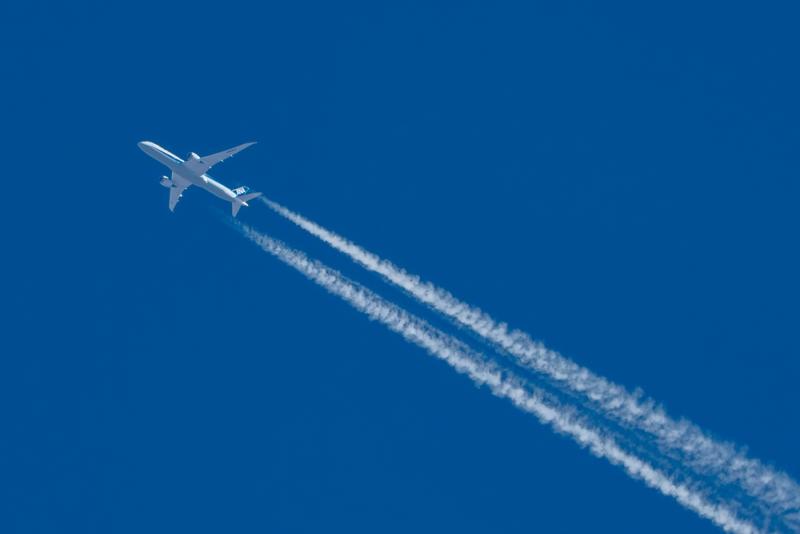
Large-scale flight trials by Air France, a consortium member of the SESAR JU industrial research project, CICONIA, are shedding further light on how aviation could reduce its non-CO₂ climate effects.
Conducted between February and April 2026, the trials covered nearly 4,300 commercial flights over the North Atlantic. The aim was to identify areas where persistent contrails were likely to form and assess whether alternative flight paths could reduce their climate impact.
Of the flights analysed, 245 were identified as having a high potential climate impact, with alternative flight paths calculated and assessed for each. In 130 cases, the flights were effectively rerouted.
The results highlight the highly concentrated nature of contrail-related effects: just 3% of flights accounted for 25% of the total climate impact associated with contrails within the scope of the trial.
For the flights that were rerouted, the reported results included a 57% reduction in the climate impact of contrails and a 36% reduction in their overall climate impact. Across the full trial scope, the climate impact associated with contrails was reduced by 8%, representing an estimated benefit equivalent to 22,000 tonnes of CO₂.
“This testing program represents an important step in assessing, under real-world conditions, the solutions available to reduce the climate impact of contrails. The results are encouraging and will be shared as part of ongoing scientific and European research initiatives, “ said Vincent Etchebehere, Vice President Sustainability and New Mobilities, Air France.
The trials form part of wider European research into aviation’s non-CO₂ effects. As highlighted in the European ATM Master Plan, addressing these effects is a priority for aviation stakeholders in the years ahead. Research and innovation activities are exploring improved forecasting and climate-impact assessment, as well as operational approaches that could help mitigate these effects.
The results also highlight the importance of collaboration across the aviation system. Changes to flight paths require coordination with and approval from air traffic control, while further research is needed to assess how mitigation measures can be applied effectively alongside the safety and efficiency requirements of air transport.
The findings provide further evidence to inform ongoing European research and innovation aimed at understanding and addressing aviation’s non-CO₂ climate effects.
Read the Air France press release
More about CICONIA
More about SESAR’s work on addressing aviation’s environmental footprint